When the Bike Lane Ends Without Warning
Painted lanes stop for loading bays, construction, and old street designs that never finished the strip. Local riders already know the merge. Visitors on rental bikes often invent a third path along the shopfronts — and become the person everyone else has to steer around.
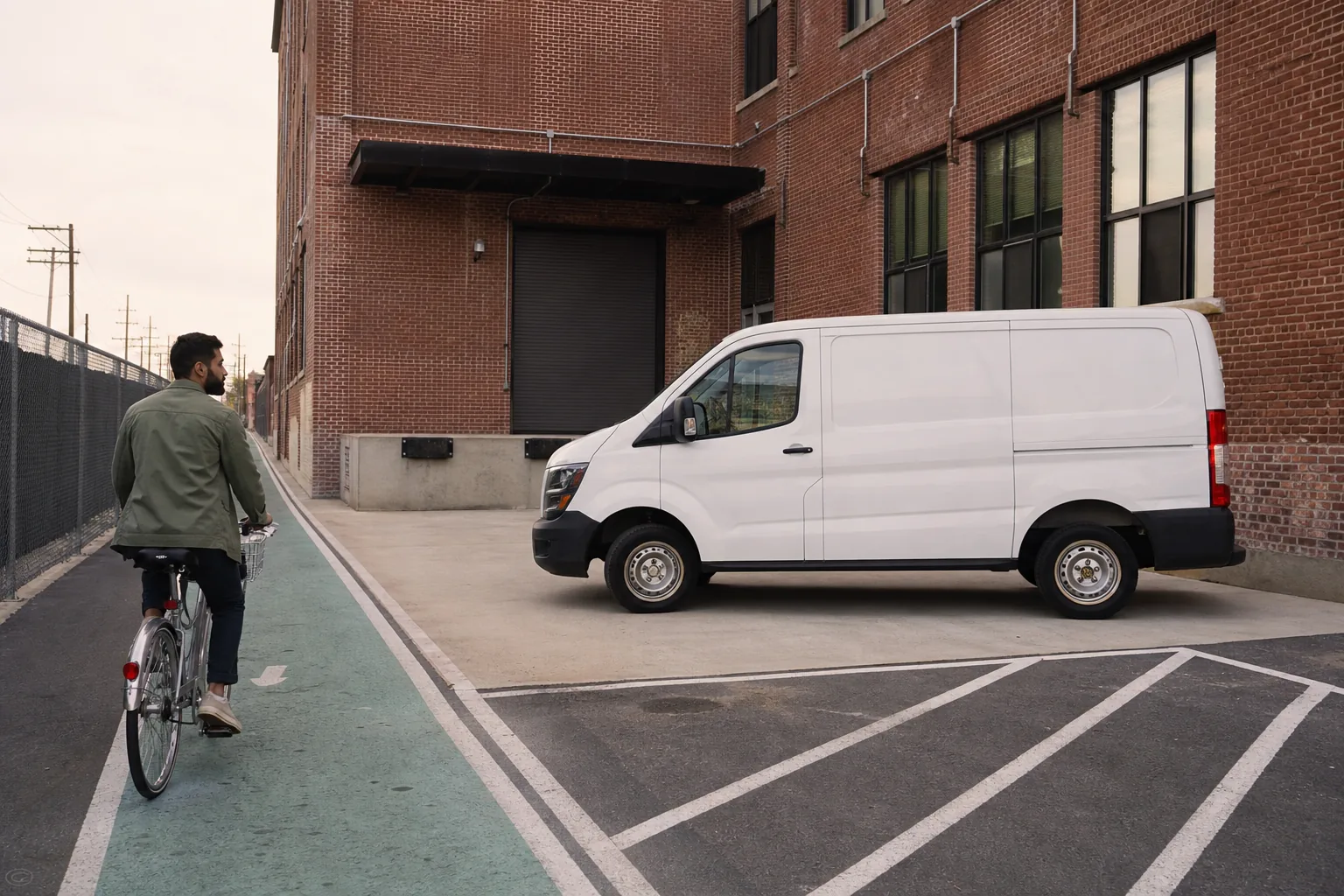
What “the lane ended” usually looks like
Sometimes the paint simply fades into asphalt. Sometimes a van sits across the last metres. Sometimes a protected track becomes a shared sidewalk without a sign that a visitor would notice at riding speed. The common thread is the same: the space you were occupying disappears faster than your plan for the next block.
Rental brakes are often softer than a bicycle you own. That matters at lane endings, because the decision — take the travel lane or get off — has to happen while you still have room to slow. If you wait until you are already beside the van, you will swerve into something worse: a door zone, a pedestrian gap, or a sudden stop that surprises the rider behind you.
The goal is not to keep rolling at any cost. The goal is to stay readable to the people who use this street every morning.
Three choices that usually work
Local riders rarely invent a fourth option. Watch them once and you will see the same pattern. You can rehearse it before the first rental hour so the decision feels ordinary when the paint stops.
- Signal early, glance back, and take the travel lane when the street is moving and there is a clear gap.
- Slow to walking pace and dismount when the next stretch is a crowd, a market edge, or a shared plaza.
- Stop with both feet down before a loading bay or blind corner, then restart only when you can be seen.
What does not work is hugging the curb while weaving between parked bumpers, or ringing a bell through a group of people who have nowhere to step. Those moves look decisive in the moment and read as careless to everyone else.
Habits that keep you out of the way
Shared-road friction is often about timing, not courage. A visitor who hesitates in the middle of a merge creates a larger problem than a visitor who takes the lane cleanly for one block.
- Keep your hands ready to signal before the stripe thins, not after it has already vanished.
- Look for where local riders actually ride after the paint ends — that line is the unofficial map.
- Yield early at crossings instead of threading gaps that only exist on a phone screen.
- Get off when a bell would only startle; walking twenty metres is not a failed ride.
- Never stop in the protected lane to unfold a phone; pull to a stand or a clear pocket first.
When the sidewalk looks tempting
A quiet sidewalk can feel safer than mixed traffic, especially on a first rental. It usually is not. You become unpredictable to people on foot, and you still have to re-enter the roadway later without a clean merge. If the street is too fast for your comfort, dismount and walk to a quieter parallel block rather than riding the pavement.
Ask yourself one question before you invent a path: would a local rider do this at commuting hour? If the answer is no, choose the travel lane, a full stop, or a walk. Those three options cover nearly every lane ending we brief.
How to prepare this before you collect the key
On a consultation map we mark the first place the paint likely disappears, not the prettiest river path. You can do a lighter version yourself: look at the first kilometre from the desk and find one obvious interruption — a loading zone, a bridge ramp, a market street. Decide in advance whether that spot is a lane take or a dismount.
Then ride the first twenty metres out of the stand as practice for the same decision. Most awkward corrections happen while you are still finding the brakes. If you can merge calmly there, the later lane ending is less of a surprise.
This briefing describes patterns on shared streets. It does not replace local rules, posted signs, or advice from specialists about fitness and road safety. Confirm conditions on the day, and treat other people’s commute as part of the place you are visiting.