City Dock or Day Counter: Which Desk Fits the Trip
Both desks put a bicycle in your hands. They do not start the same way, and they do not fail the same way. Choose the desk for the hours you will actually ride, not for the photograph you hope to take later.
Two desks, one shared first minute
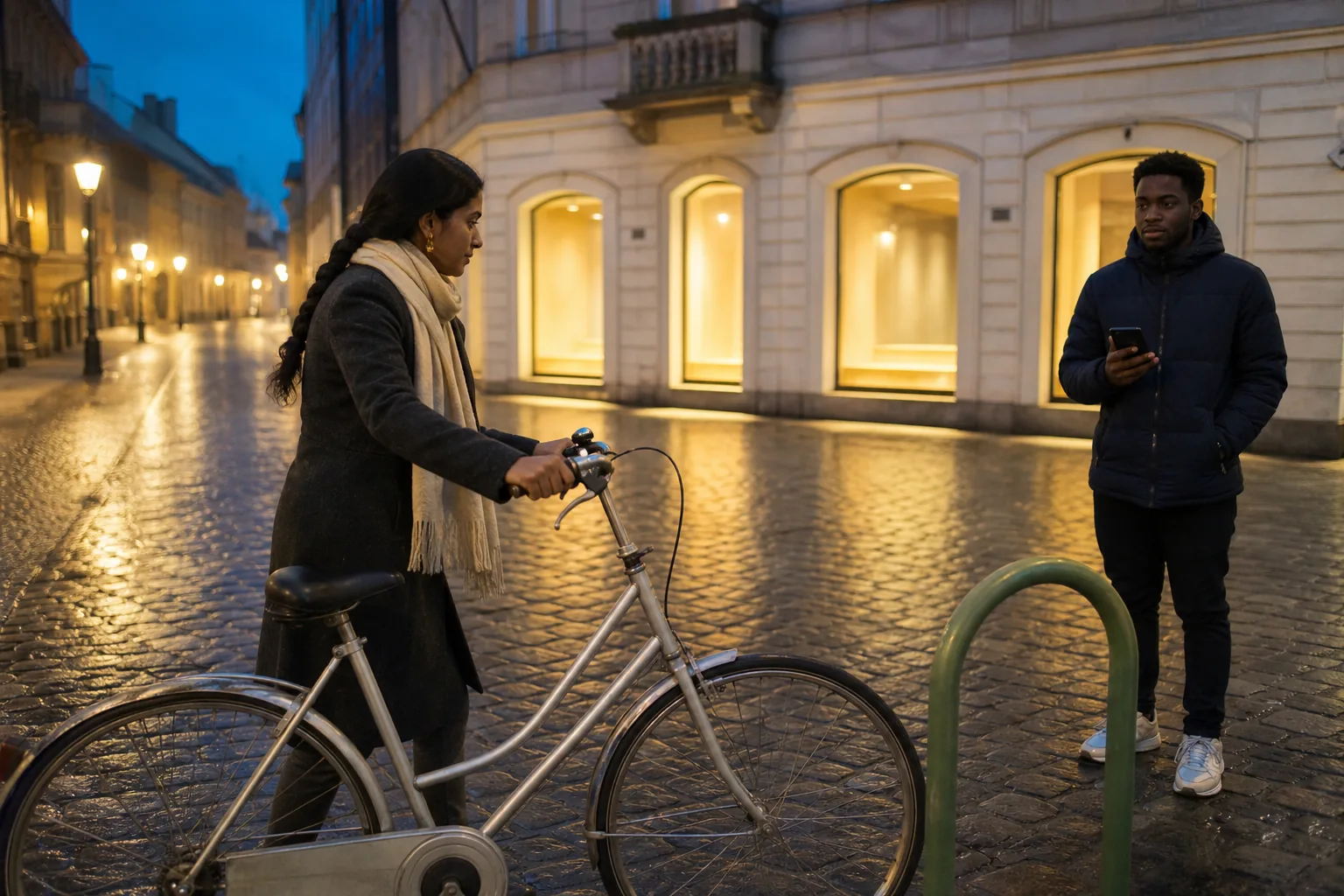
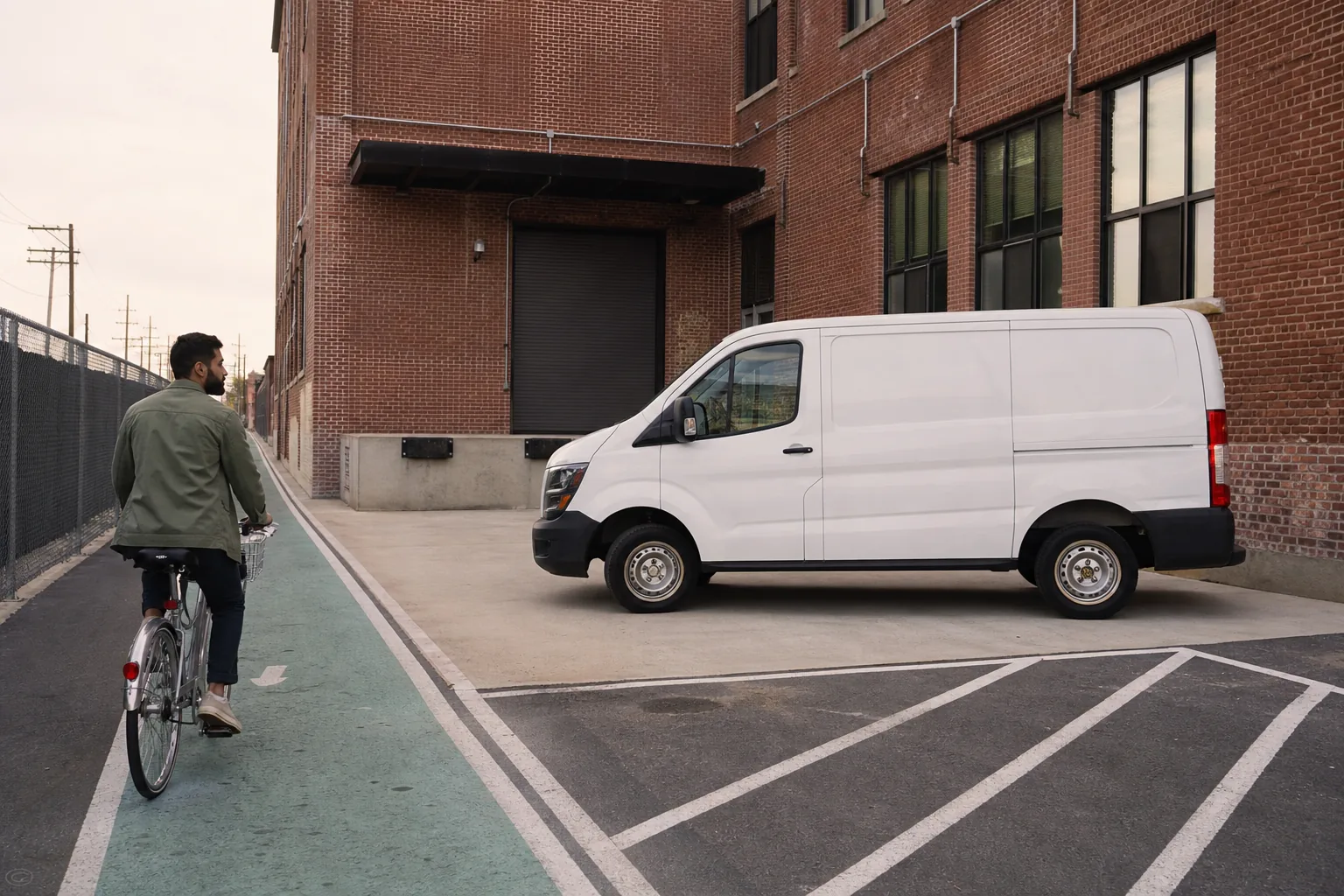
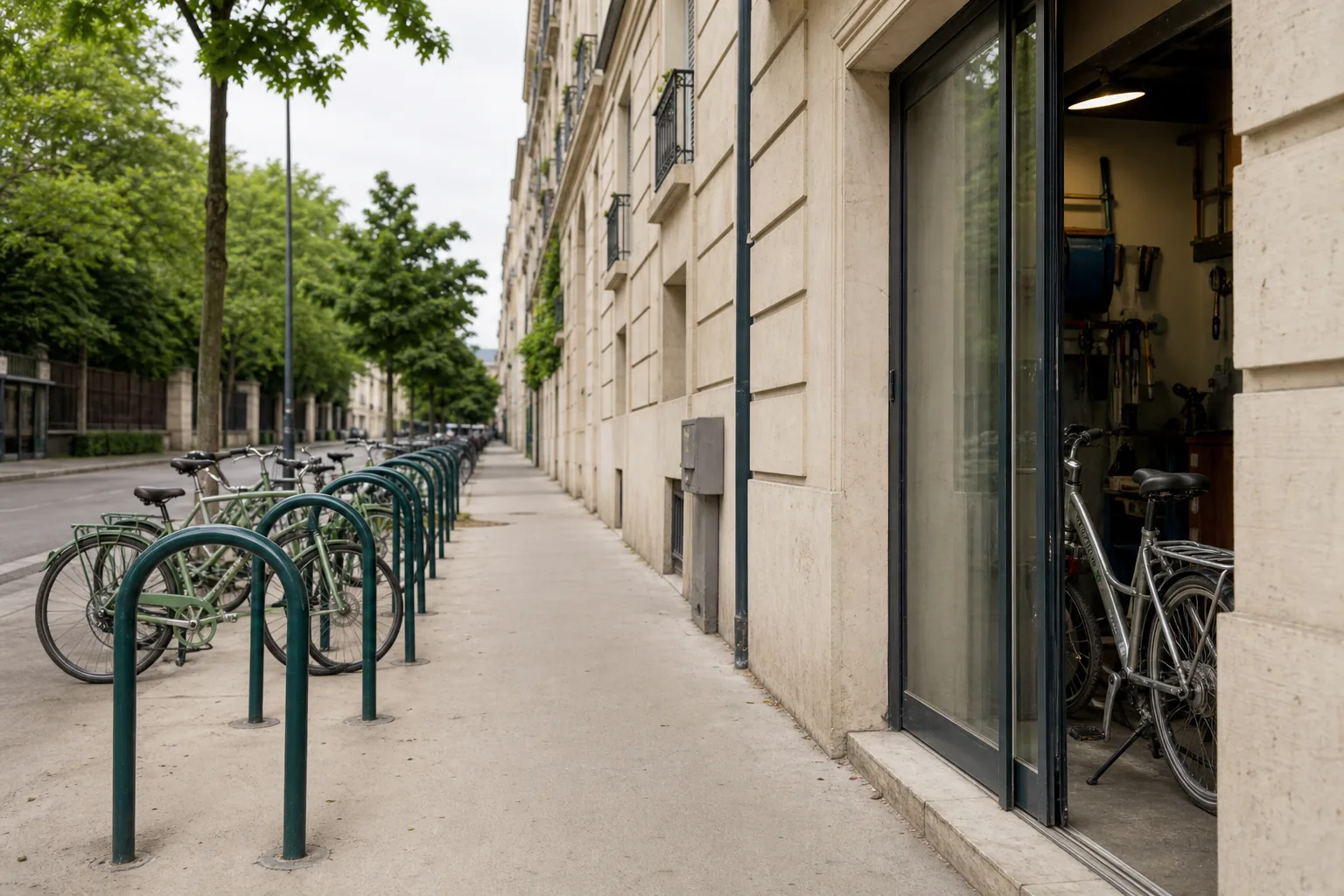
A timed city dock unlocks from a row and charges by the minute or by a short unlock window. A day counter hands you a bicycle for a working day, expects you to lock it yourself, and wants the machine back at the same doorway. The first minute still matters in both places: look back, find the brakes, and leave the stand without blocking the next person.
Visitors often pick the dock because the app looks simple, or the day counter because a clerk is standing there. Neither reason is enough. The useful question is how the return works when the street is busy and you are tired.
Pick the desk for the return problem you are willing to manage, not for the unlock that feels easiest in the lobby.
How a timed dock usually behaves
Dock systems reward short hops between stands. They punish a late or blocked return: if the nearest row is full, you keep riding while the clock keeps moving. The quiet skill is reading nearby stands before you leave, and building slack so a full dock is an inconvenience, not a crisis.
At pickup you should still check the bicycle. Soft brakes, a missing bell, and a dim light show up on dock bikes as often as on shop bikes. The app may say the machine is ready; the pavement decides whether that is true.
- Confirm how returns are marked complete — tone, screen, or lock click.
- Ask what happens when the nearest stand is full in the late afternoon.
- Note a second stand three streets away before you roll out.
- Keep the first loop short enough that you can practice one return early.
How a day counter usually behaves
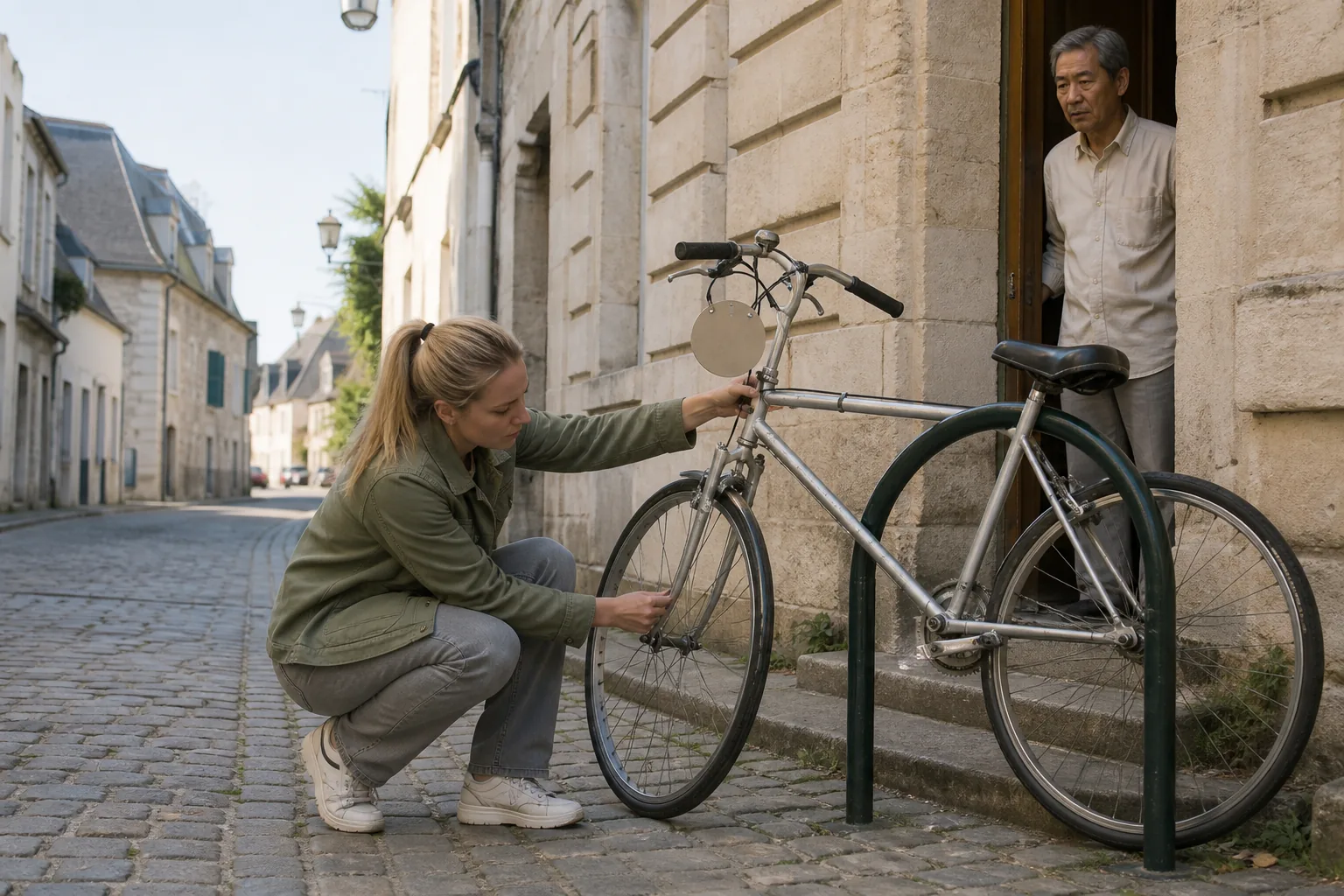
A day counter is a person, a lock, and a closing time. You leave with more control over where you park, and less forgiveness if you arrive after the doorway has stopped taking machines. Staff often assume you know which part of the frame the lock should pass through. Ask while you still have both feet on the pavement.
Day counters fit trips that need one machine for several hours, a basket for a bag, or a flatter saddle for mixed streets. They fit poorly if you want to abandon the bicycle far from the shop without a clear return plan.
- Ask what time “back” means — handed to staff, locked at the door, or parked in a marked bay.
- Practice closing the lock once before you leave the counter.
- Photograph the bicycle only if the desk asks for it; follow their order, not a habit from another shop.
- Leave for the return with more time than the map suggests, especially near closing.
- Re-check lights, brakes, and the lock in the same order you used at pickup.
Questions that sort the two desks quickly
You do not need a long interview. A few concrete answers usually decide the day. Write them down; memory softens when a queue forms behind you.
- Will I return to a slot that can fill, or to a person who can close the door?
- Do I need the bicycle for one short loop or for most of the day?
- Am I comfortable locking on the street, or do I want the desk to handle more of that?
- If plans change midday, which system is easier to end early without improvising?
Multi-day tourist shops sit beside these two options. They often feel like a longer day counter: more gear, a flatter machine, and the same need for a clear return window. The first-hour problem does not disappear because the rental lasts longer.
Where first-hour friction shows up
Dock friction is usually about capacity and the clock: a full stand, a slow unlock, a return that does not register. Day-counter friction is usually about people and doors: a queue at closing, a lock that staff will not accept, a bicycle that does not match the tag you were given. Neither system is kinder; they simply fail in different places.
Briefings that ignore that difference send travellers into the wrong problem. If you already know you dislike locking on the street, a day counter that expects street parking will frustrate you even when the bicycle feels good. If you hate watching a timer while you hunt for a slot, a dock will do the same.
A simple way to choose before you book
If your trip is a few short segments with easy stand access, a timed dock can keep the logistics light. If you need one bicycle for a full stretch of the day and a predictable doorway at the end, a day counter is usually clearer. If neither answer feels honest, walking those blocks may be the better briefing — and that is a valid outcome, not a failed rental.
Once you choose, stay with that desk for the whole loop you planned. Switching mid-day without a clear return path is how travellers invent rules the street does not recognise. Finish the rental you started, then decide whether a different desk fits the next stretch.
Desk rules, opening hours, and docking maps change between trips. Confirm them again on the day with the operator in front of you. This comparison describes patterns we see; it does not replace the sheet taped to the counter you will stand at.