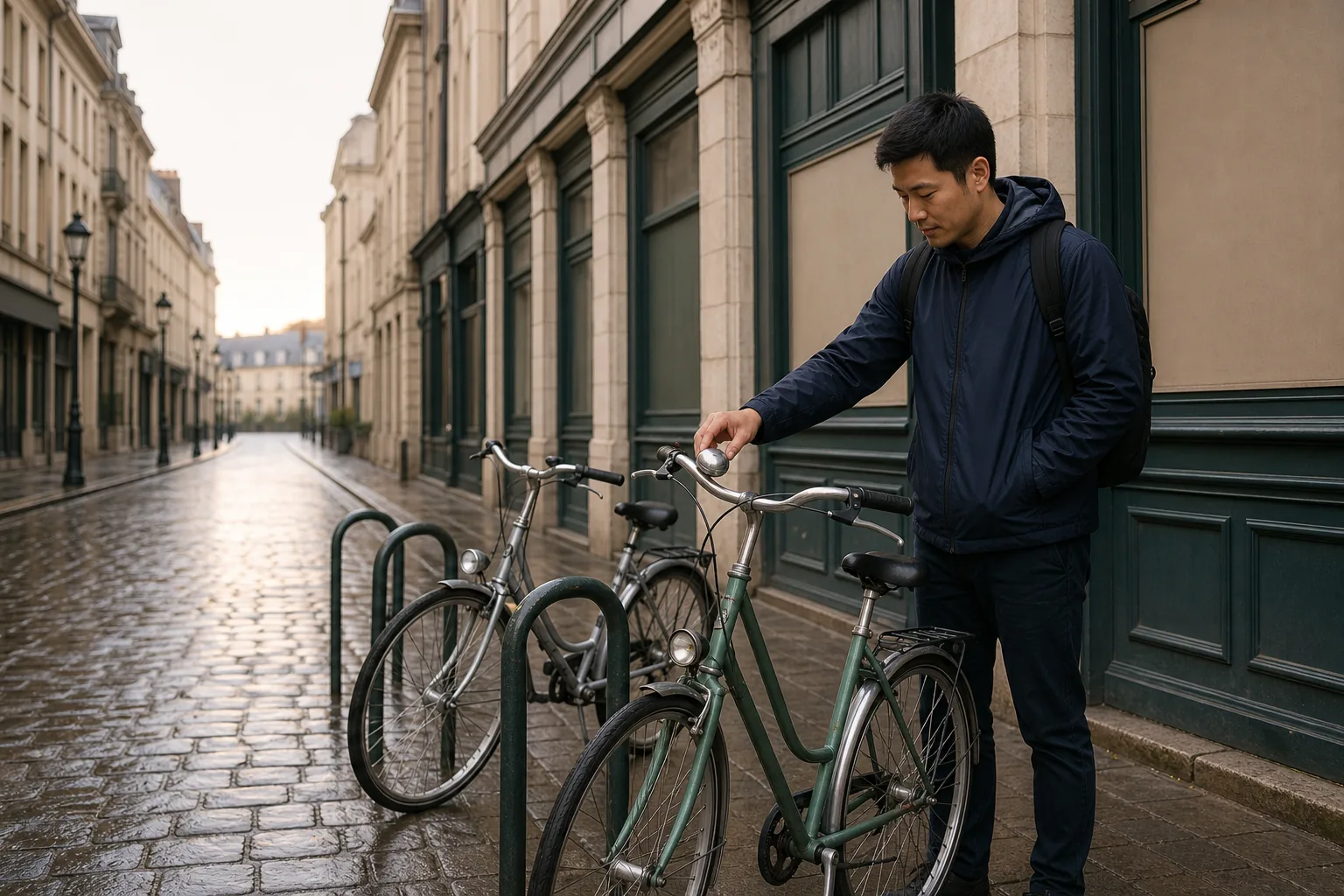
Early morning rental bicycle dock on a quiet city side street, rows of upright city bikes in muted green and silver, wet cobblestones reflecting pale sky, a rider in a dark jacket checking a handlebar bell before leaving the stand, shop shutters still closed across the road, 1920x1080

cryofract — Renting a Bike on a Trip: How to Ride Without Getting in the Way When the Rules Are Different

We treat a rental bicycle as its own stretch of the itinerary, not a faster walk between two doors.

The hard part is rarely balance. It is the unspoken order: what gets checked at the desk, which way you leave the stand, which strip of asphalt you are expected to use, how you lock up for twenty minutes, and how you get the bicycle back without holding the next person in line. We write that order down and walk it through with you before the trip, not after the first confused junction.

Learn More
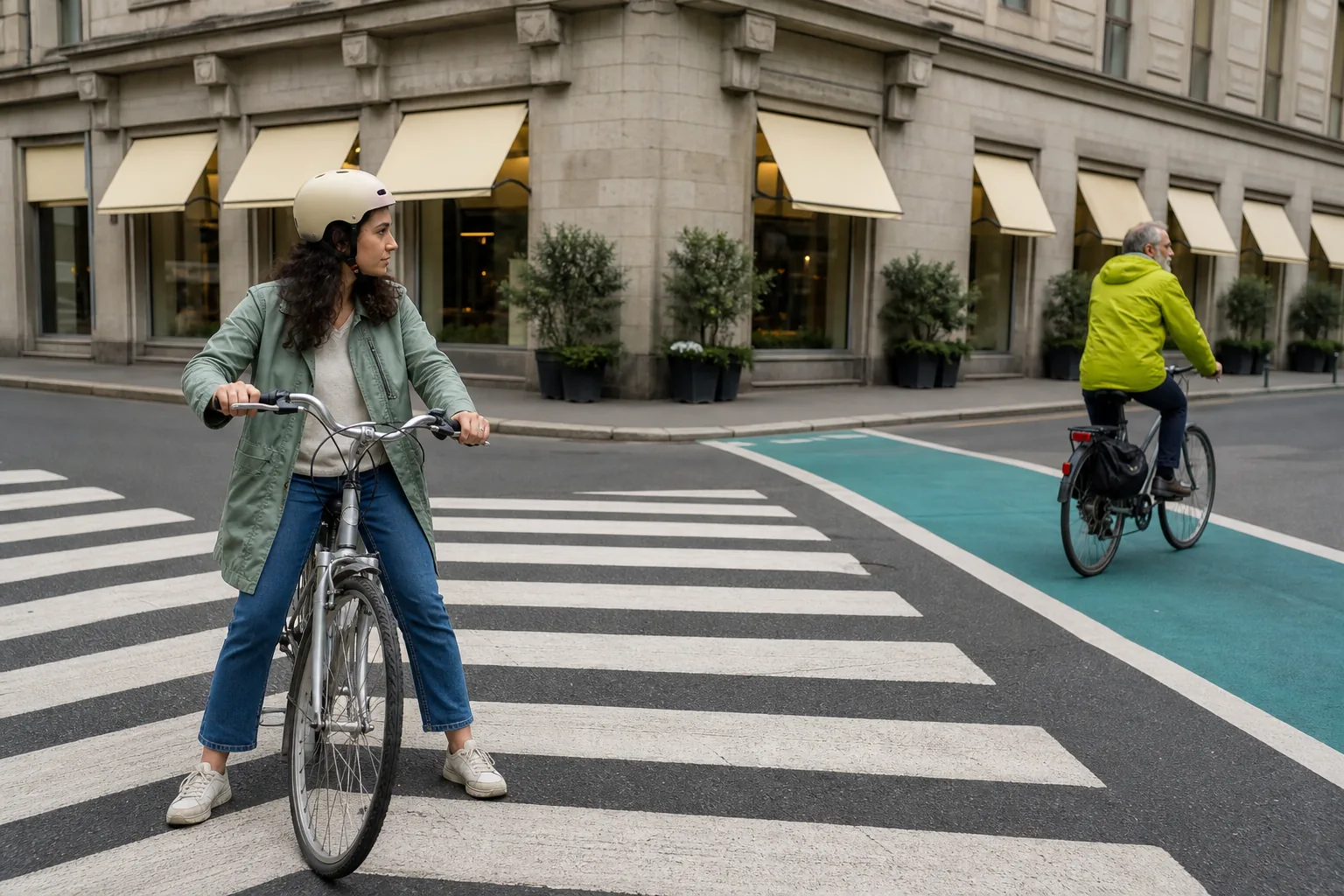
A visitor on a silver city rental bicycle pausing at a painted crossing, both feet on the ground, looking left along a tram-lined street while a local rider in a raincoat continues in the bike lane, pale mid-morning light, shop awnings and a stone facade behind, 1600x1067

On two wheels

A different view of the same streets

A bus shows you stops. A walk shows you shopfronts. A rental bicycle shows you the seams: the place the lane is protected, the place it is only a stripe of paint, and the place it vanishes into a loading bay. You see how people wait at a junction with one foot down, how they take the door zone, and how they thread a market street without scattering pedestrians.

That view is useful only if you can stay in the flow. A visitor who weaves, stops on the line, or rides the sidewalk because the next turn is unclear becomes the obstacle everyone else is steering around. We do not sell the ride as scenery. We teach the habits that keep you readable to the people who use this street every morning.

Before we talk about a route, we talk about the machine you will actually be given. Rental brakes are often softer than a bike you own. Bells may be missing. Baskets rattle. Lights may be dim. The briefing starts there, because a pretty river path does not help if you cannot slow down in time for the person already in the lane.

The desk

Three rental desks, one shared sequence

City docks, day counters, and tourist shops look unrelated until you watch the first five minutes. The hardware changes. The order of actions barely does.

The timed city dock

You unlock from a row, ride by the minute, and return to a slot that may already be full. The quiet skill is reading the map of nearby stands before you leave, not after the clock is running and the nearest dock is blocked by a delivery van.

The day counter

You collect a bicycle for a working day, lock it yourself, and bring it back to the same doorway. Staff will point at a lock and assume you know which part of the frame actually holds. We walk through that before you are standing in the doorway with a queue behind you.

The multi-day tourist shop

You leave with panniers, a flatter saddle, and a longer loop in mind. The extra days do not cancel the first-hour problem: you still have to enter traffic, park without blocking a ramp, and know what “back by closing” means in that street, not on your own watch.

Field notes

What we keep count of

These are working tallies from briefings and rides we have sat through with clients, not slogans. They describe how often a pattern shows up, not a promise about your next afternoon.

48

Rental desks compared across trips

Dock apps, paper waivers, and shop counters that still use a numbered tag on the handlebar.

6

Checks before the wheel turns

Saddle height, brake bite, tyre firmness, bell, lights, and whether the lock you were handed actually closes.

14

Shared-road habits we watch for

Yielding at crossings, taking the lane when the stripe ends, and getting off when the street becomes a crowd.

Unwritten order

The sequence locals never explain

People who ride the same streets every week skip the commentary. The steps below are the ones visitors usually meet in the first hour, whether the bicycle came from a dock or a shop.

  1. Before the desk says yes

    Confirm opening hours for return, what counts as damage, and which photo they want of the bicycle. Ask where you may stop for coffee without blocking a ramp. Do this while you still have both feet on the pavement.

  2. The first minute out of the stand

    Look back, take the lane they actually use, and ride twenty metres before you touch a phone. Most awkward corrections happen in that first stretch, while you are still finding the brakes.

  3. Lane, turn, signal

    Stay where local riders stay. Signal early. When the painted lane ends, choose the travel lane or dismount — do not invent a third path along the shopfronts.

  4. Locking up for a short stop

    Use the stand, not a tree beside a fire door. Thread the lock through the frame and a wheel. One lock on a front wheel alone is how a bicycle walks away while you buy bread.

  5. People on foot

    Slow to their pace in shared streets. Get off when the bell would only startle. Cutting a plaza diagonally is the move locals remember, and not kindly.

  6. The ride back

    Leave earlier than the map suggests. Check the bicycle in the same order you checked it out. A late return is not a small rounding error — it is a blocked slot and a longer conversation at the desk.

The team

The people who take the bike with you

Each consultant rents a bicycle on their own trips and turns those hours into briefings you can use on the first morning.

Elena Voss, a woman in her late thirties with dark hair tied back, wearing a linen shirt, standing beside a row of rental bicycles at a city dock in soft daylight, 400x400

Elena Voss

Rental Systems Researcher

Urban Rental Systems Briefing Certificate, Visitor Cycling Institute

Elena compares docks, day counters, and tourist shops until the first five minutes of each one can be described in the same plain sequence. She briefs clients on what to inspect before the wheel turns.

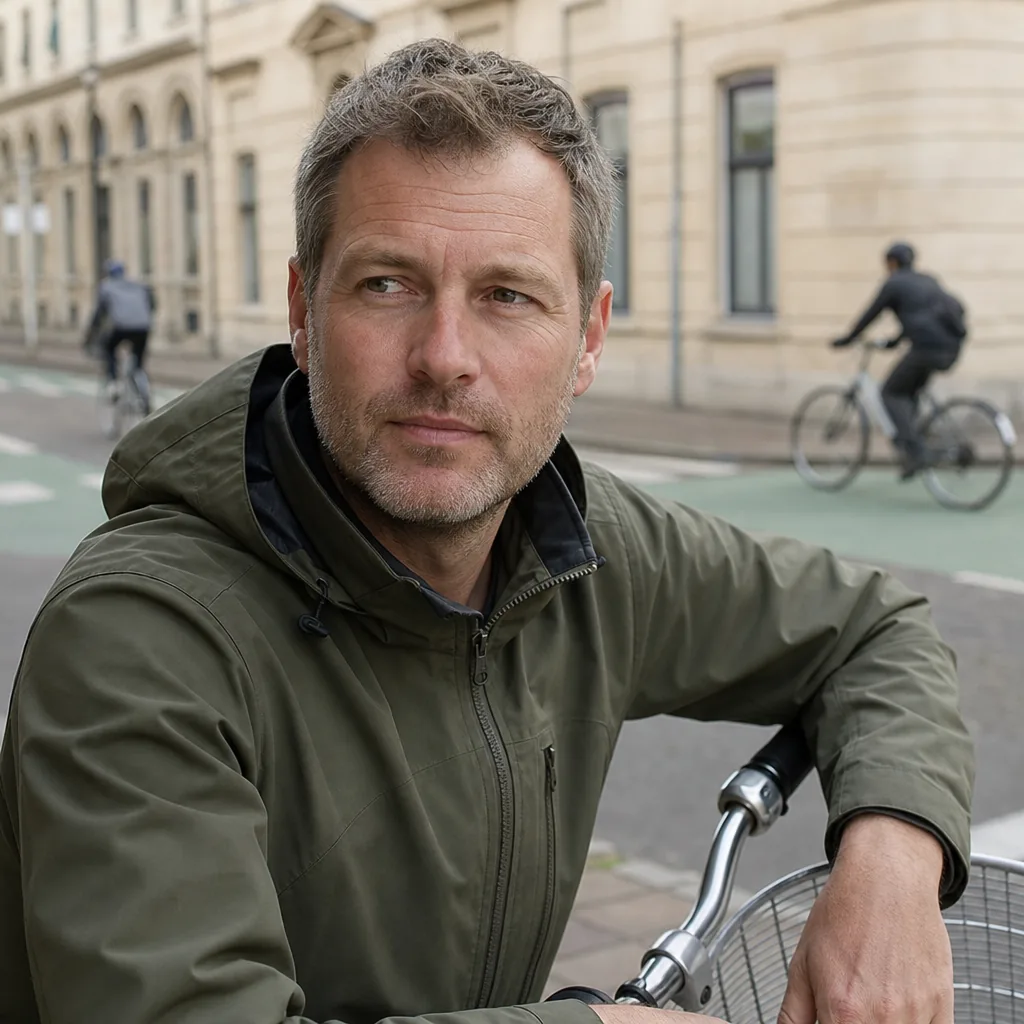
Marcus Hale, a man in his early forties with short greying hair, wearing a weatherproof jacket, pausing with a rental bicycle at a street corner and watching passing riders, 400x400

Marcus Hale

Road-Sharing Consultant

Shared-Road Observation Credential, Street Flow Workshop

Marcus watches how locals merge, signal, and yield when the painted lane disappears. His notes become the part of the briefing that keeps a visitor from occupying the wrong strip of asphalt.

Priya Langford, a woman in her mid-thirties with black hair over one shoulder, wearing a knit jumper, holding a paper street plan beside a locked rental bicycle at a metal stand, 400x400

Priya Langford

First-Ride Planner

First-Hour Ride Planning Certificate, Traveler Briefing Guild

Priya builds the first hour so a new rider can leave the stand, complete a short loop, lock up once, and return without improvising in traffic. She is the person who shrinks the map on purpose.

From the road

Travellers who asked us to sit in on a first rental

These are specific hours, not general praise. Each person rented a bicycle they did not own and had to give it back the same day or the next.

Daniel Okonkwo

Museum educator

I had planned to cross a market square on the bicycle because it looked empty on the map. Priya made me walk that stretch instead. The square was full of delivery trolleys. I would have been the person ringing a bell at people who had nowhere to step. The rest of the loop felt ordinary after that, which was the point.
Rated 5 out of 5

Hannah Briggs

Landscape architect

I wanted a multi-day tourist bicycle and almost booked a dock bike by the minute because it looked simpler. Elena lined up the two desks side by side: one needed a return slot that fills by late afternoon, the other needed a lock I had never closed. I left with the shop bike and a written order for the first lock-up. The ride itself was the easy part.
Rated 4 out of 5

Tomasz Weller

Copy editor

The dock app looked friendly until the nearest return stand was full. Marcus had already made me pick a second stand three streets away and leave twenty minutes earlier than I wanted. I still arrived with a queue. Without that slack I would have been circling with a bicycle I could not park, which is how you become a problem in someone else’s commute.
Rated 5 out of 5

Walk through a rental ride before you collect the key

Tell us which kind of desk you expect to use and how much cycling you already do. We will answer with a briefing, not a packaged tour. If a bicycle is a poor fit for the streets you will actually meet, we will say so.

Contact Us

How we work

cryofract provides knowledge about rental bicycles as a part of travel, and consultations on the sequence that keeps a visitor from blocking local riders. We rent the same kind of bicycle you will be handed, write down the unstated steps, and prepare you to ask better questions at the desk. Field notes are cross-checked with the Harbor Dock Briefing Cooperative and the Street-Share Observation Desk.

Please read this before you decide anything

cryofract provides knowledge about rental bicycles during travel and offers consultations on that part of a trip. The materials on this site are meant to help you understand how desks, lanes, locks, and returns usually work. They describe patterns we have seen; they are not a substitute for the rules posted at the rental desk you will actually use.

Road conditions, opening hours, docking maps, and what staff will accept as a return change between trips and sometimes between mornings. Confirm those details again with the operator on the day, even if you have ridden a similar bicycle elsewhere.

Questions about fitness, load, weather exposure, or safety on the road belong with qualified specialists, not with a travel briefing site. We do not treat cycling as a health plan and we do not assess whether a ride is suitable for your body.

Any decision you make — to rent, to ride a given street, to lock in a given place, to return late or early — is yours. cryofract is not responsible for fines, damage charges, missed returns, collisions, or other outcomes that follow from those decisions.